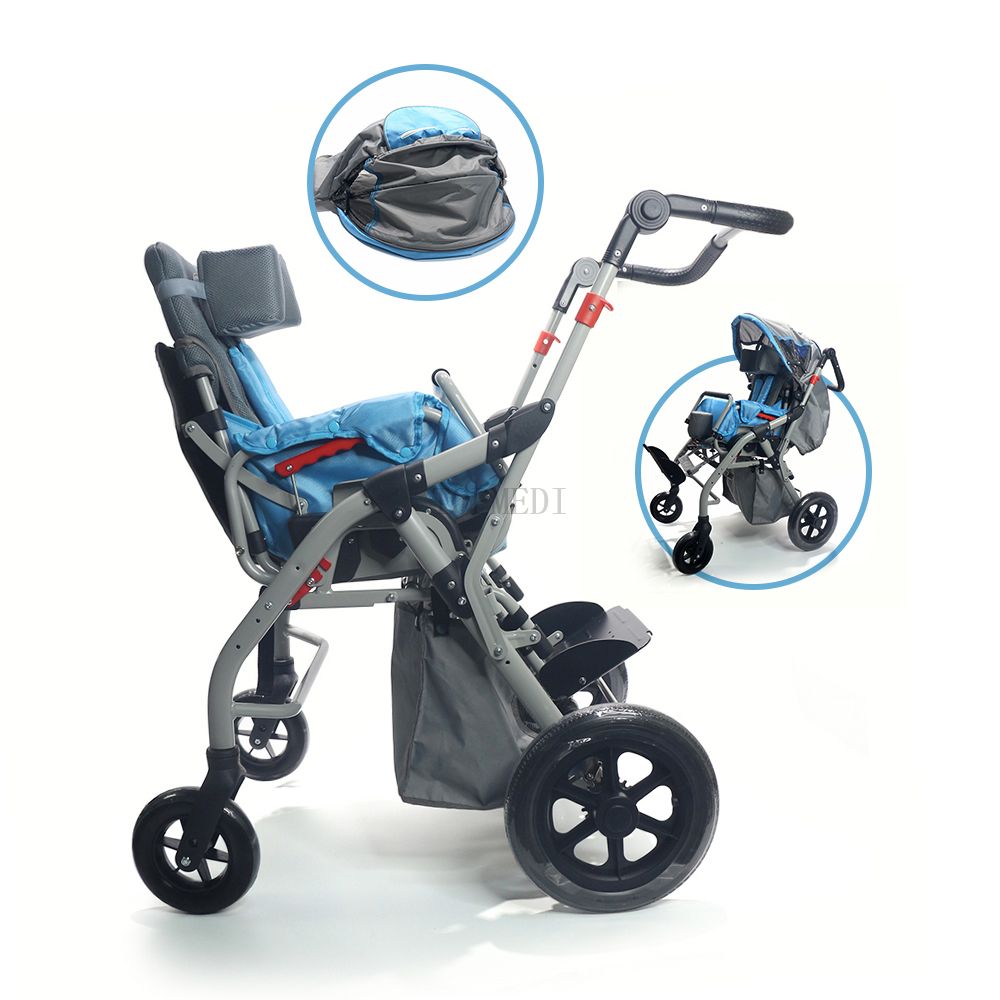
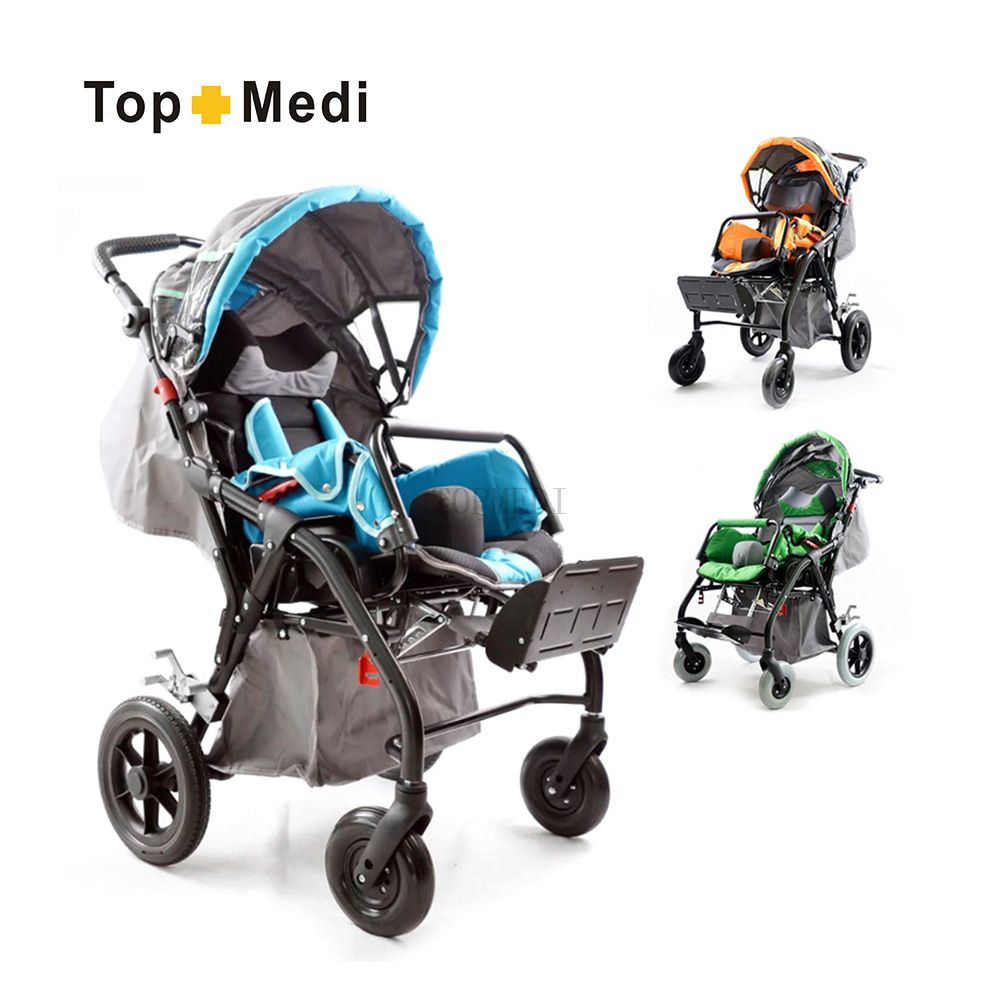
At Topmedi, we believe every child deserves the freedom to explore, engage, and experience the joy of movement. For children living with cerebral palsy (CP), a group of disorders that affect movement, posture, and muscle tone, achieving this freedom presents unique and profound challenges. Simple, everyday activities—playing in the park, navigating the classroom, joining family gatherings—can become complex obstacles. For parents and caregivers, finding tools that provide not just support, but also dignity, comfort, and a spark of independence for their child, is a paramount concern. This is where the specialized world of pediatric mobility, and specifically, the modern cerebral palsy wheelchair, becomes not just a piece of equipment, but a passport to a fuller life.
Understanding the Unique Needs
Cerebral palsy manifests differently in every child. Some may experience mild motor impairments, while others require comprehensive postural support for nearly all activities. Spasticity, involuntary movements, muscle weakness, and skeletal asymmetries are common. Therefore, a standard, one-size-fits-all wheelchair is often inadequate and can even be detrimental, leading to discomfort, pain, and further physical complications.
A truly supportive wheelchair for a child with CP must be an extension of their body and a facilitator of their development. It must address:
Postural Management: Proper alignment of the pelvis, spine, and limbs is critical. It aids in digestion, breathing, and function, while preventing contractures and deformities.
Pressure Relief: Children with limited mobility are at high risk for pressure sores. Seating systems must distribute weight evenly.
Comfort & Safety: The chair must be comfortable for long periods and include secure, yet non-restrictive, positioning belts and harnesses.
Growth & Adaptability: Children grow and their needs change. A good system should be adjustable and modular.
Independence & Engagement: The ultimate goal is to empower the child to interact with their world—whether through self-propulsion, controlled power mobility, or simply by being positioned optimally to use their hands and communicate.
The Topmedi Approach: Innovation Wrapped in Care
At Topmedi, we engineer pediatric mobility solutions with a dual philosophy: clinical excellence and childhood-centric design. Our cerebral palsy wheelchairs are not merely devices; they are carefully crafted ecosystems of support and potential.
1. The Foundation: Customizable Seating Systems Our journey begins with the seating. We offer a range of configurable seaters and backs, from contoured foam systems to modular, adjustable components. Key features include:
Adaptable Pelvic & Trunk Supports: To stabilize the pelvis in a neutral position, a prerequisite for proper spinal alignment.
Adjustable Abductors, Adductors, and Lateral Supports: These provide gentle guidance to manage tone, prevent wind-sweeping deformities, and offer lateral stability for the trunk.
Headrests & Shoulder Supports: Designed to position the head and shoulders comfortably, aiding in visual engagement and swallowing safety.
Comprehensive Range of Accessories: From harnesses and pommels to anti-thrust cushions and footplates with heel loops, every detail is considered for security and function.
2. The Frame: Lightweight, Adjustable, and Responsive We pair our seating with lightweight, durable frame systems that grow with the child. Our frames offer:
Multiple Adjustability: Seat depth, back height, and angle can be modified. The rear axle position can be changed to alter the center of gravity, making the chair easier to propel for some children.
Tilt-in-Space and Recline Functions: These are vital for pressure redistribution, facilitating rest, aiding in physiological functions, and providing different visual perspectives. A smooth, controlled tilt is far superior to a simple recline for true postural support.
Compact and Transport-Friendly Designs: We understand family life. Our chairs are designed to be relatively lightweight and foldable for easy transport.
3. The Pathway to Independence: Propulsion Options
Self-Propulsion: For children with the ability and strength, we optimize frame geometry and use lightweight components to make pushing efficient.
Power Assist: Innovative push-rim activated power assist devices can be added to reduce the physical burden of propulsion, extending the child’s range without fatigue.
Full Power Mobility: For children with limited upper limb function, we provide access to sophisticated, pediatric-appropriate power wheelchairs. With modern control interfaces (like joysticks, switches, or even head arrays), a child can experience the profound autonomy of self-directed movement, which is crucial for cognitive and social development.
Beyond the Chair: A Partnership for Progress
Choosing a mobility solution is a significant decision. Topmedi stands with you beyond the sale. Our process involves:
Collaborative Assessment: Working with families, therapists, and clinicians to understand the child’s specific medical, physical, and lifestyle needs.
Trial and Configuration: Where possible, facilitating trials and meticulous configuration to ensure the best match.
Education and Support: Ensuring parents and caregivers are confident in using and maintaining the equipment.
A Vision of Inclusion
For a child with cerebral palsy, the right wheelchair is transformative. It is the vehicle to the classroom, the tool for playing with siblings, and the means to look peers in the eye. It reduces pain, enhances participation, and fosters a sense of self.
At Topmedi, we are committed to pioneering the technologies that make this transformation possible. We see the child first—their potential, their personality, their dreams. Our mission is to build the bridge between their capabilities and their aspirations, one perfectly fitted, thoughtfully engineered wheelchair at a time.
If you are exploring mobility options for a remarkable child in your life, we invite you to connect with us. Let’s discuss how we can help chart a course toward greater comfort, function, and freedom.